.png)

What Is ESD and Why It Matters
Electrostatic discharge (ESD) occurs when a static charge builds up and suddenly releases. While a small spark might seem harmless, in precision environments it can:
- Damage sensitive electronics and robotics
- Corrupt data or disrupt automation systems
- Cause explosions in flammable areas
- Endanger operators handling delicate equipment
In facilities where automation drives productivity, a single uncontrolled discharge can cost thousands in downtime and damaged goods.
How ESD Flooring Works
ESD flooring prevents static buildup by providing a controlled path for electricity to safely dissipate to ground.
Unlike standard epoxy or polished concrete, ESD systems incorporate conductive elements such as carbon fibers or metallic particles that spread static charges evenly across the surface.
There are three primary types of ESD floors:
- Conductive (ECF): Highly conductive; designed for electronics and data centers.
- Dissipative (ESD): Slower transfer rate; safer for people interacting with machinery.
- Anti-static: Reduces charge buildup but does not conduct current to ground.
Where Static Is Most Dangerous
ESD control is critical in facilities where static can interfere with or damage processes. Examples include:
- Electronics Manufacturing: Prevents PCB and microchip damage.
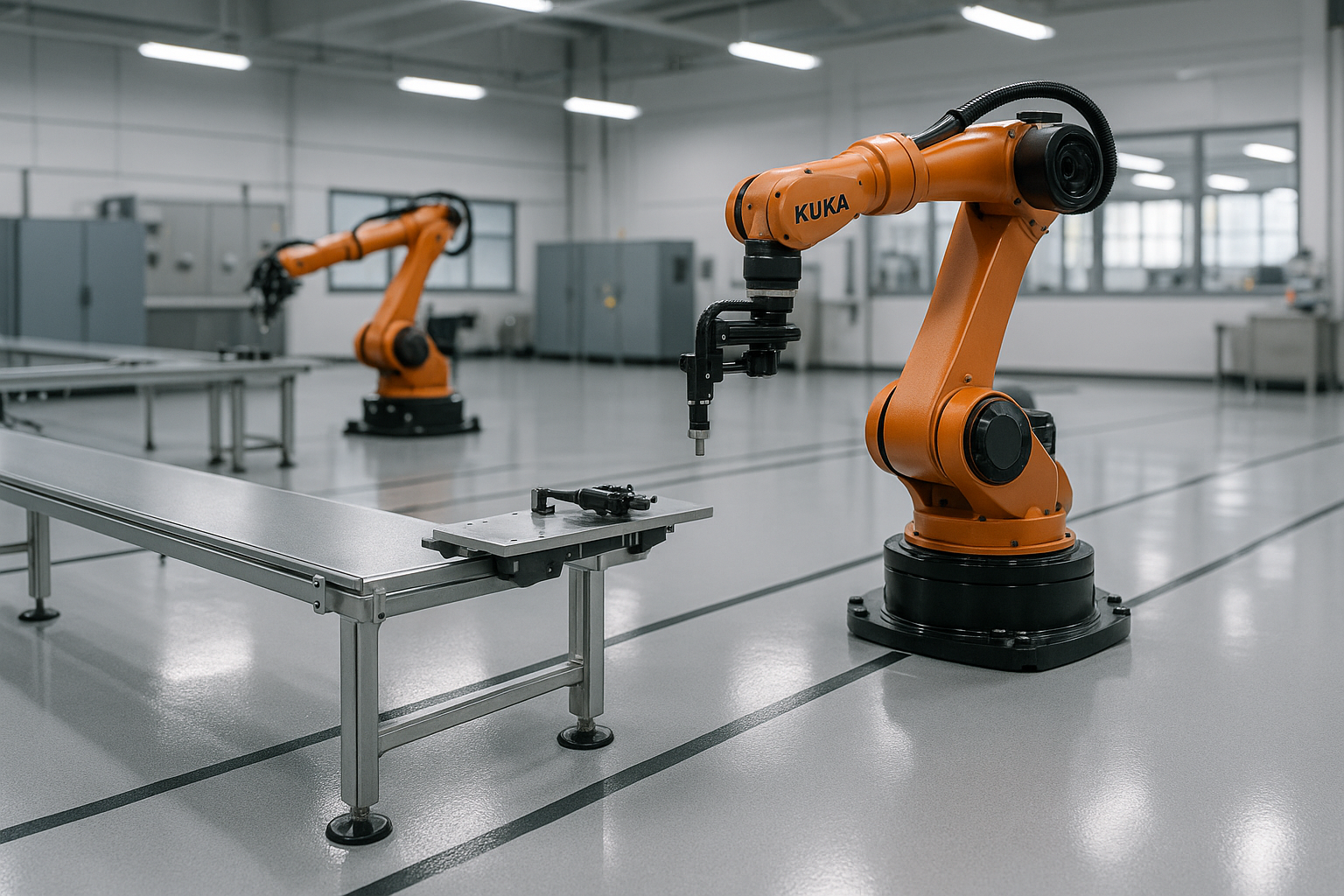
- Robotics and Automation: Protects control systems from interference.
- Pharmaceutical and Biotech: Maintains sterile, electrically stable environments.
- Data Centers: Reduces static interference with servers and drives.
- Explosive/Flammable Environments: Prevents ignition from static sparks.
Epoxy vs. Urethane for ESD Applications
Both epoxy and urethane flooring systems can be engineered for static control, but their performance depends on use case.
Epoxy is ideal where precision and aesthetics are key, while urethane excels in environments that combine static control with chemical or temperature exposure.
Installation and Grounding
Proper grounding is what makes an ESD floor functional. The process involves:
- Surface Preparation: Achieve correct CSP (typically 2–4) for adhesion.
- Primer Application: Promotes adhesion and seals pores.
- ESD Base Coat: Contains conductive fillers.
- Copper Ground Strips: Embedded beneath coating to connect to building ground.
- Topcoat: Provides durability, color, and consistent resistivity.
Grounding points are verified with resistance-to-ground testing to ensure compliance with ANSI/ESD S20.20 standards.
Common Mistakes to Avoid
- Improper grounding — no physical connection to the building’s ground network.
- Ignoring humidity control — static control depends on moisture balance.
- Using incompatible cleaners — waxes and sealers can block conductivity.
- Skipping performance testing — resistance testing ensures the system performs as specified.
At Surface Solutions, every ESD installation is verified with meter readings and documented resistance mapping for quality assurance.
The ROI of ESD Flooring
While ESD systems can cost slightly more upfront, their value is significant. Preventing just one incident of static discharge-related downtime often justifies the investment.
Benefits include:
- Fewer damaged components
- Improved operational safety
- Compliance with ESD standards and audits
- Increased equipment lifespan
For companies automating production or integrating robotics, the floor becomes part of the safety and performance infrastructure.
The Future: Smarter Floors for Smarter Facilities
As Industry 4.0 and smart manufacturing continue to evolve, the role of flooring will only grow. Static control, data transmission, and even embedded sensors are already shaping the next generation of industrial flooring technology.
Choosing an ESD-ready system today ensures your facility is prepared for tomorrow’s automation demands.
📞 Call 877-CSTM-FLR
📧 Email carolina@cstmflr.com
🌐 Visit www.cstmflr.com
Protect your people, your technology, and your productivity — from the ground up.