.png)

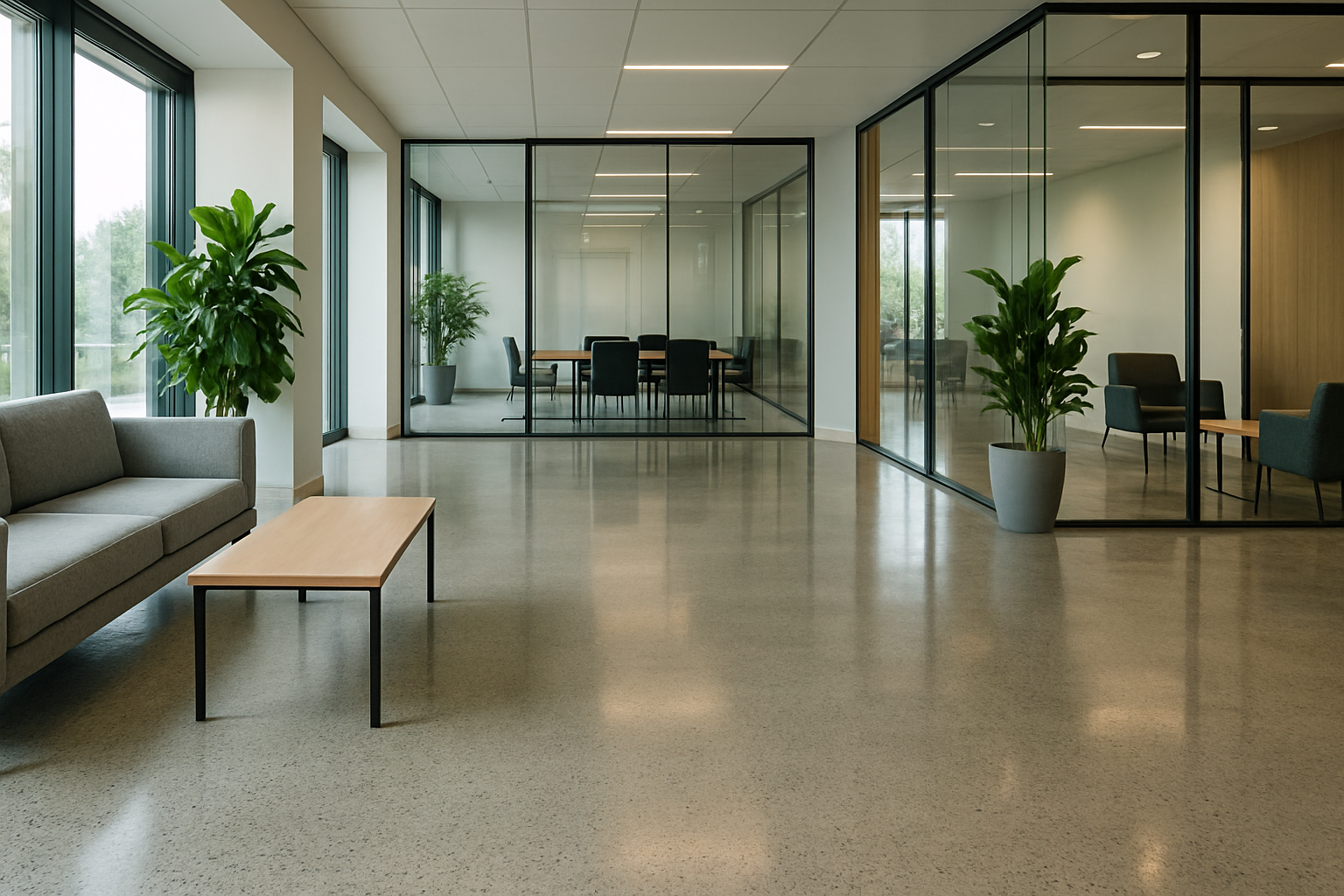
Flooring and the ESG Framework
ESG frameworks measure how environmentally and socially responsible a company’s operations are. Flooring plays a surprisingly large role in two of these pillars:
- Environmental: Material selection, energy efficiency, and lifecycle emissions.
- Social: Indoor air quality, worker safety, and occupant comfort.
Concrete and resinous flooring can either contribute positively to these goals or hinder them depending on installation methods, material sourcing, and maintenance practices.
The Environmental Impact of Flooring Choices
Flooring contributes significantly to embodied carbon and resource consumption. Replacing or resurfacing systems prematurely can create unnecessary waste and energy use. Sustainable flooring focuses on longevity, low VOC emissions, and minimal replacement.
Polished Concrete and Sustainability
Polished concrete reuses the existing slab, eliminating the need for new materials. Benefits include:
- No adhesives or overlays
- Zero-VOC sealers and densifiers available
- Increased light reflectivity (reducing artificial lighting needs)
- Extremely long lifespan with simple maintenance
This makes it one of the lowest-impact flooring systems available for commercial and industrial spaces.
Epoxy and Urethane Innovations
Resin systems have evolved, too. Modern low-VOC or bio-based epoxies and urethanes provide chemical resistance without high solvent content. Urethane cement systems, in particular, can withstand thermal and chemical stress while maintaining low environmental emissions.
How Sustainable Floors Support LEED and ESG Reporting
Many organizations pursuing LEED certification or internal ESG benchmarks can earn credit through flooring system choices. Examples include:
- Material Reuse (MR Credit): Using the existing concrete slab as the wear surface.
- Low-Emitting Materials (IEQ Credit): Selecting low-VOC or zero-VOC coatings.
- Energy Optimization: Polished concrete’s reflectivity improves lighting efficiency.
- Maintenance Reduction: Durable systems reduce waste and chemical cleaning agents.
Each of these contributes directly to the “E” pillar of ESG while supporting measurable sustainability claims.
Social and Operational Benefits
Improved Air Quality
Polished concrete eliminates off-gassing adhesives, while water-based coatings and sealers minimize harmful emissions. This leads to safer work environments and compliance with indoor air quality standards.
Worker Safety
Slip-resistant finishes, thermal stability, and reduced maintenance chemicals all create safer workplaces — aligning with the “S” in ESG.
Long-Term Cost Predictability
Sustainable flooring reduces maintenance costs, aligning environmental goals with financial stewardship — the “G” pillar of responsible governance.
Measuring Impact
Forward-thinking facility managers are now quantifying their flooring choices. Metrics include:
- VOC content and emissions per square foot
- Energy reduction through light reflectivity (LRI)
- Maintenance lifecycle cost analysis
- Recyclability and end-of-life waste
Surface Solutions assists clients in documenting these factors for ESG reporting and sustainability certifications.
Case Study: Corporate Headquarters Retrofit, New York
A corporate office pursuing LEED Silver certification replaced its vinyl and carpet with polished concrete. The result:
- 47% reduction in lighting energy use
- Zero adhesives or VOCs introduced
- Estimated 20-year lifespan before refinishing needed
This single material change contributed to two separate ESG reporting categories and improved the building’s Energy Use Intensity (EUI).
The Future of Sustainable Flooring
As ESG standards tighten, flooring will continue to evolve:
- Bio-based resins derived from soy and cashew oils
- Carbon-neutral concrete using recycled fly ash and slag
- Digital maintenance tracking to measure environmental impact
What was once a simple finish is now a strategic tool in sustainability planning.
Call 877-CSTM-FLR
Email carolina@cstmflr.comVisit www.cstmflr.com