.png)

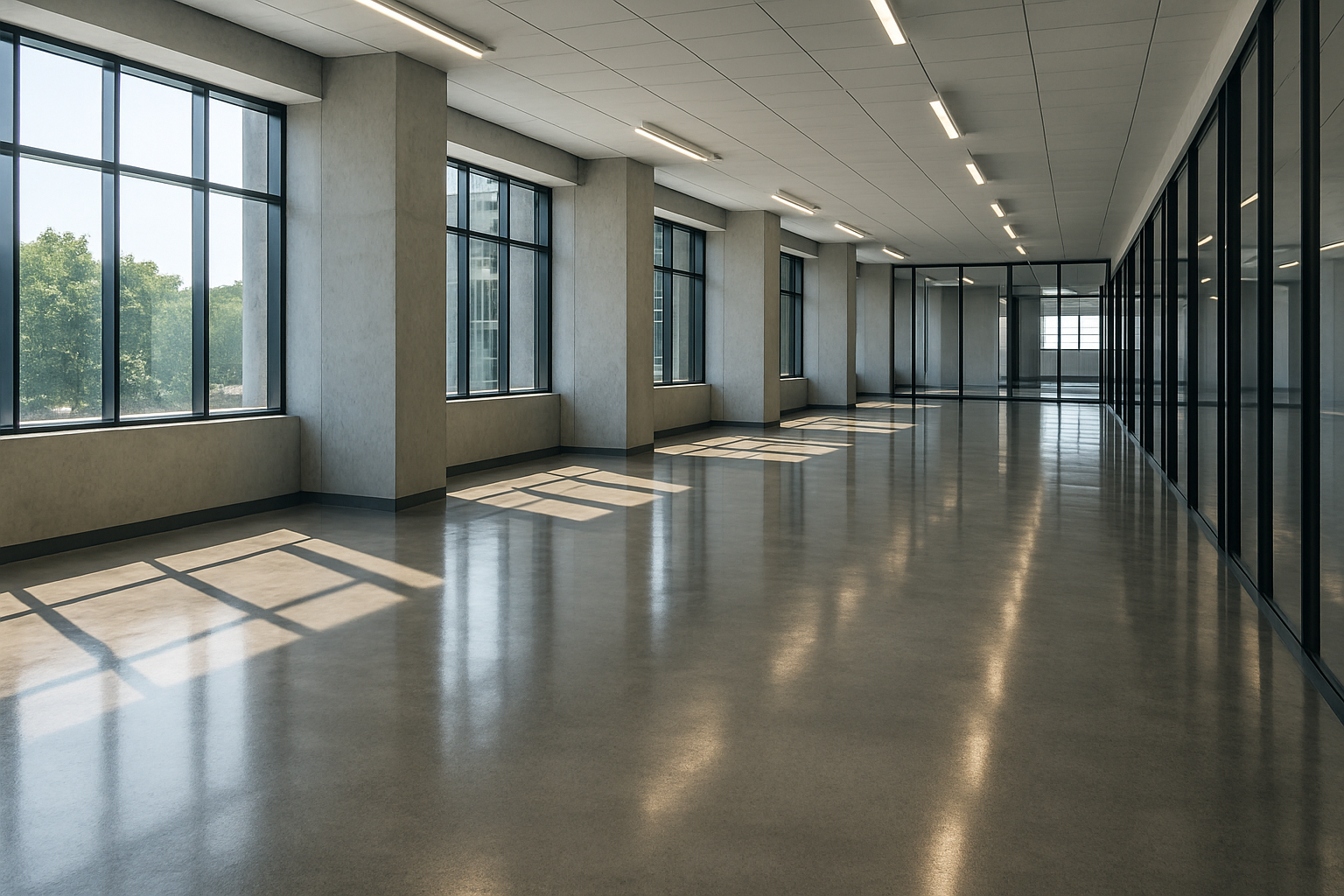
The Science of Floor Reflectivity
Reflectivity, or Light Reflectance Value (LRV), measures how much visible light a surface reflects. It’s expressed as a percentage from 0 (pure black, no reflection) to 100 (pure white, maximum reflection).
Polished concrete typically falls between LRV 25–45, depending on sheen and aggregate exposure, while light-colored epoxy coatings can reach LRV 60–80.
Higher LRV means more light bounces around the room — allowing facility managers to achieve the same brightness with fewer fixtures or lower wattage.
Why Reflectivity Matters
- Energy Efficiency
Floors with higher reflectivity can reduce artificial lighting needs by up to 30%. That adds up quickly in warehouses, offices, and retail spaces. - Employee Safety and Comfort
Better lighting reduces shadows, improves visibility, and minimizes eye strain — a critical factor in manufacturing and logistics facilities. - Aesthetic Enhancement
Reflective floors make spaces feel larger, cleaner, and more inviting, particularly in customer-facing environments. - Regulatory Compliance
LEED and ESG initiatives increasingly consider lighting efficiency and surface reflectivity in sustainable design reporting.
Comparing Material Reflectivity
Material
Average LRV
Best Use Case
Polished Concrete (400 grit)
25–35
Industrial and warehouse floors
Polished Concrete (1500 grit)
40–45
Office, retail, and public spaces
Epoxy (light gray or white)
60–80
Food plants, cleanrooms, labs
Urethane Cement
25–30
Thermal and chemical environments
The right finish depends on both light goals and performance needs. For instance, polished concrete offers high reflectivity without coatings, while epoxy achieves even higher values for critical visibility environments.
Design Tip: Light Color and Texture
Reflectivity is not only about color — texture and gloss level play huge roles.
- Matte surfaces diffuse light, softening glare.
- Gloss surfaces amplify reflectivity but can create hotspots if lighting isn’t evenly distributed.
- Aggregates and pigments can be used strategically to manipulate how light interacts with the floor.
At Surface Solutions, we use mockups and LRV testing to help architects and designers balance reflectivity, function, and comfort.
Case Study: Packaging Facility, New Brunswick NJ
A packaging client was struggling with uneven light levels that required costly overhead fixture upgrades.
Instead, Surface Solutions polished their 60,000 sq. ft. floor to a 1500-grit finish, boosting LRV by nearly 20%. As a result, the facility reduced its lighting energy consumption by 28% without adding a single fixture.
The floor also enhanced visibility for safety markings and created a cleaner, more professional workspace.
Balancing Beauty and Function
Reflectivity isn’t just for showrooms. In modern commercial design, it’s a measurable factor that influences cost, safety, and energy use.
By analyzing the relationship between light, surface finish, and intended use, flooring becomes a performance-driven design tool — not just a background surface.
Why This Matters for Facility Owners and Designers
- Lower operational costs through energy efficiency
- Improved occupant experience
- Higher compliance with sustainability benchmarks
- Better long-term visual appeal and durability
When designed intentionally, your floor can work for your lighting system — not against it.
📞 Call 877-CSTM-FLR
📧 Email carolina@cstmflr.com 🌐 Visit www.cstmflr.com